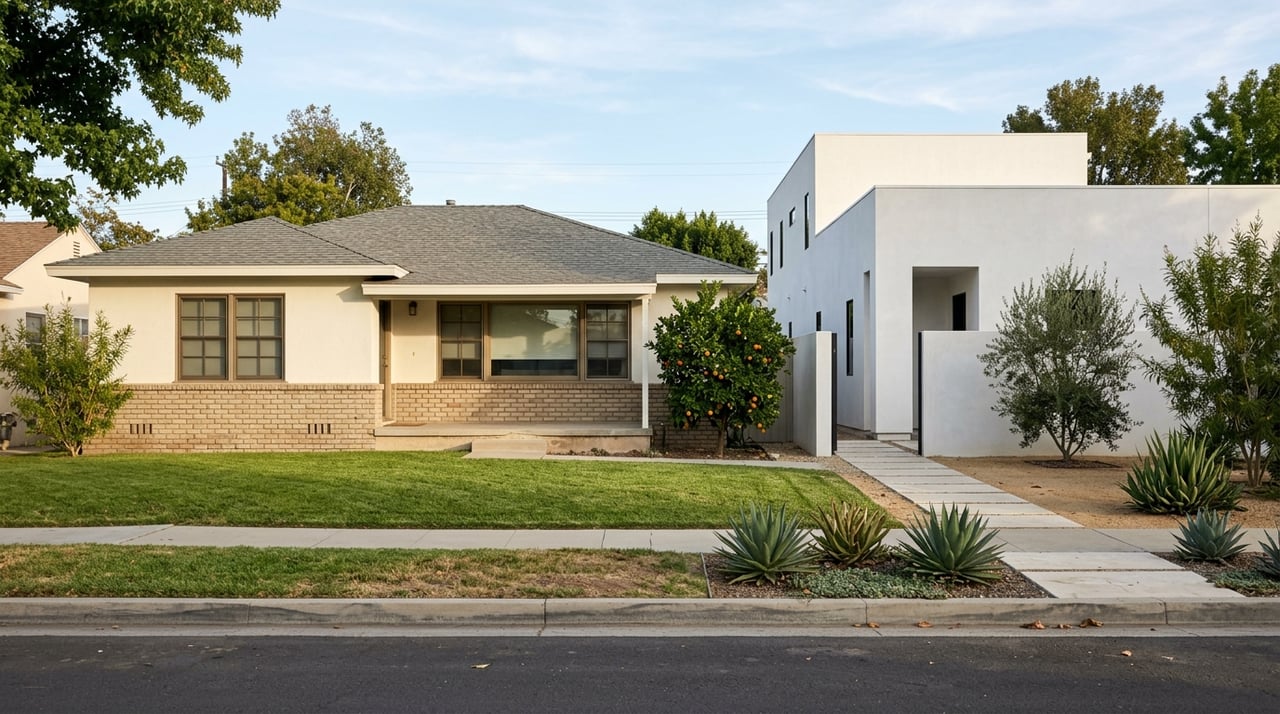
If you have spent any time watching Arcadia, you have probably noticed that two very different housing stories often share the same street. One home may be a classic ranch on a generous lot with mature landscaping, while the next is a newer custom build designed around modern square footage and indoor-outdoor living. If you are buying or selling here, understanding that mix can help you make better pricing, positioning, and long-term value decisions. Let’s dive in.
Why Arcadia Has Such a Mixed Housing Stock
Arcadia did not start as a typical central Phoenix neighborhood. According to the City of Phoenix historic survey, the original 1919 Arcadia plat was divided into relatively large five- to ten-acre lots, with a minimum house-cost requirement intended to attract affluent buyers looking for a rural setting.
That early pattern still matters today. It helps explain why Arcadia continues to feel different from many other in-town Phoenix areas, with larger parcels, estate roots, and a strong sense of landscape and lot presence.
Arcadia also sits within Camelback East, where the City of Phoenix notes there is a range of housing diversity and that a major portion of the housing stock was built between 1950 and 1970. In practical terms, that gives you a layered market made up of original estate-era parcels, mid-century ranch homes, renovated homes, and newer custom builds.
How Ranch Homes Shape Arcadia Value
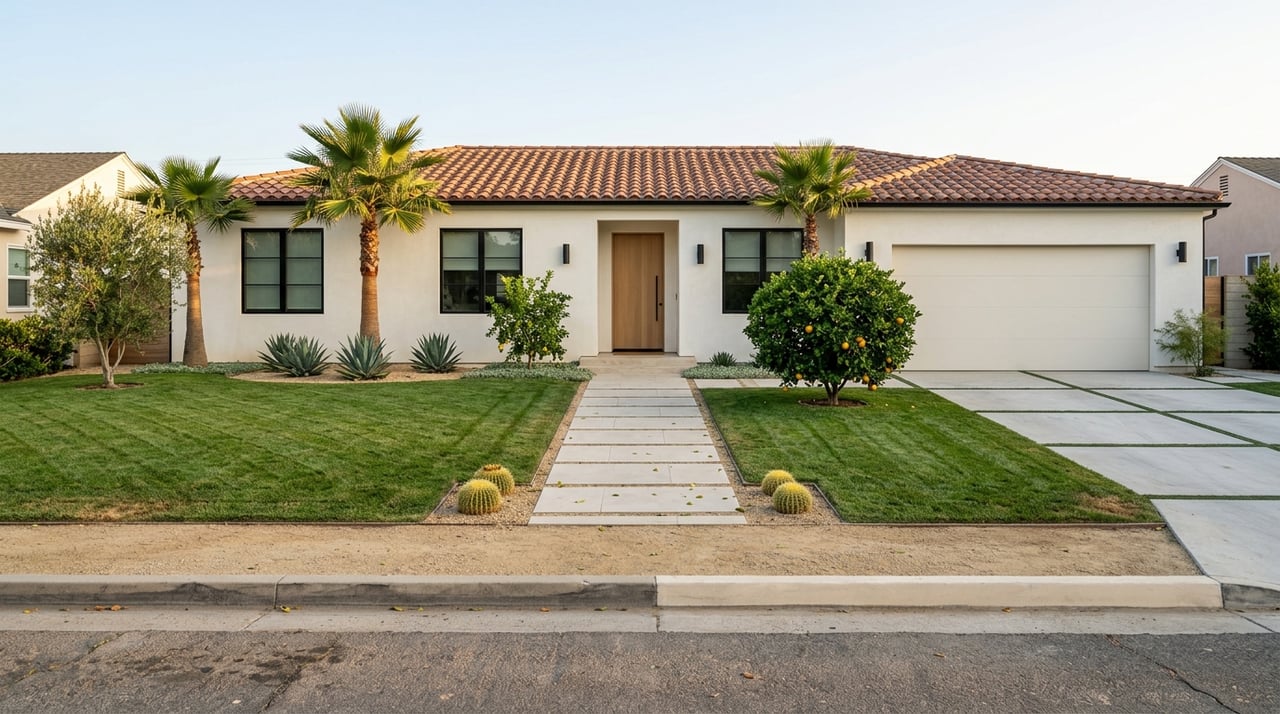
Classic ranch homes remain a major part of Arcadia’s identity. The ranch house form is typically single-story, low-roofed, and organized around a rectangular plan with more open living areas and less separation than many older traditional home styles.
In Arcadia, that matters because ranch homes often fit naturally with the neighborhood’s established lot patterns and mature landscape. Their scale and placement can feel consistent with the area’s long-standing streetscape, which is part of the appeal for buyers who value character and setting.
A well-kept or thoughtfully updated ranch can hold strong value for reasons that go beyond age. In this market, lot size, neighborhood fit, and the home’s overall condition often matter just as much as whether the house is original or recently renovated.
What buyers often appreciate in ranch homes
- Single-story living
- Established lot patterns
- Mature landscaping and street presence
- Architectural character tied to Arcadia’s history
- Renovation potential without changing the home’s core footprint
How New Builds Compete Differently
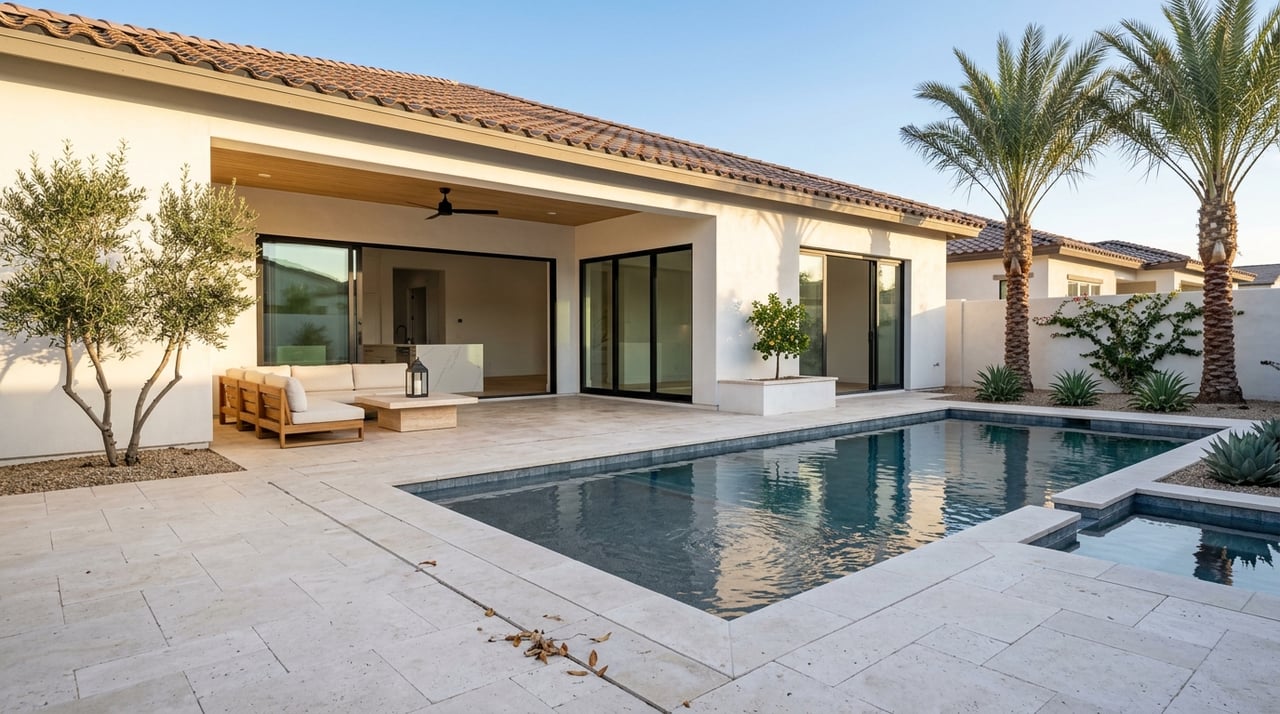
New custom homes in Arcadia tend to compete on a different set of strengths. They often emphasize larger plans, more bedrooms and bathrooms, stronger indoor-outdoor flow, and a move-in-ready experience.
In Phoenix, custom homes are reviewed as site-specific projects. The City of Phoenix states that these homes must go through site-plan approval and residential permit review, including checks for building code compliance, zoning, grading, drainage, and related requirements.
That process matters because it shows newer construction is not simply about building bigger. It is also about how the home fits the parcel and complies with current development standards.
Where new builds may stand out
- Larger contemporary floor plans
- More turnkey livability
- Updated construction methods
- Modern utility and systems performance
- Design features built around current lifestyle preferences
Lot Use Can Change the Value Story
One of the biggest differences between a ranch home and a new build is how the site is used. In Arcadia, value is often tied to the parcel as much as the structure, so what sits on the lot and how it relates to the lot can shape buyer demand.
Phoenix zoning is not one-size-fits-all. The city states that each zoning district has its own lot-coverage guidelines, and owners need to confirm parcel-specific standards through the zoning ordinance and city mapping tools.
Arcadia also has planning layers such as the Arcadia Camelback Special Planning District and the Camelback Road Overlay. Those layers can add neighborhood-level design guidance beyond the underlying zoning, which is important when comparing an original ranch, a major remodel, and a newer custom residence.
For buyers, this means two homes with similar lot sizes may offer very different experiences. For sellers, it means your home’s value may depend partly on whether buyers see the site as a character property, a renovated lifestyle product, or a fully maximized custom home.
Energy Efficiency Is a Real Divider
One of the clearest differences between older ranch homes and newer custom builds is energy performance. Phoenix adopted the 2024 Phoenix Building Construction Code, effective August 1, 2025, and the city highlighted EV-readiness requirements for one- and two-family homes and townhouses, along with water-conservation improvements.
That signals a meaningful shift in how newer homes are expected to perform. The city also promotes ultra-low-energy single-family design through its sustainable-home resources, which further supports the idea that recent construction is being built with different performance standards in mind.
ENERGY STAR states that certified new homes are designed and built better from the ground up for energy efficiency and performance. The U.S. Department of Energy also describes certified homes as high-performance properties that meet rigorous efficiency and durability criteria and are verified by a qualified third party.
Older ranch homes can still compete well, but the path is usually through upgrades. Home energy improvements can help improve comfort, efficiency, and operating costs, which can strengthen a ranch home’s appeal when buyers compare it to newer construction.
Why efficiency matters in Arcadia
- Lower utility costs can influence buyer appeal
- Comfort and durability are part of the value equation
- New builds may offer performance advantages from day one
- Updated ranch homes can narrow the gap with retrofit improvements
Appraisers Do Not Value Old Versus New in a Vacuum
A common mistake in Arcadia is assuming newer automatically means more valuable or older automatically means less. That is not how valuation works in a mixed neighborhood.
Fannie Mae’s appraisal guidance says the improvements section should clearly describe modernizations, layout, floor plan, and other features that affect value. It also says comparable sales should be selected based on similar physical and legal characteristics, including site, room count, finished area, style, and condition.
Just as important, the guidance expects appraisers to consider the subject’s market area. Fannie Mae notes that even side-by-side properties can belong to different market areas if their features or utility appeal to different buyer pools.
That idea fits Arcadia especially well. A preserved or updated ranch may appeal to buyers focused on lot, character, and neighborhood fit, while a new custom home may appeal more to buyers prioritizing modern layout, efficiency, and turnkey living.
What This Means for Sellers in Arcadia
If you are selling a ranch home, your value may come from more than square footage. Condition, renovation quality, lot appeal, and how well the home fits the street can all influence which buyers respond and which comparable sales make sense.
If you are selling a newer custom build, the conversation often shifts toward plan functionality, finish level, energy performance, and move-in-ready convenience. In a premium market like Arcadia, those factors can shape how buyers compare your property against other luxury options.
Current market data reinforces that Arcadia operates at a premium. Redfin reported a March 2026 median sale price of $1,487,500, a median sale price per square foot of $506, and median days on market of 75, while Zillow’s Phoenix-wide data as of April 30, 2026 showed a typical home value of $411,323 and median days to pending of 23.
That premium does not erase product differences. It makes them more important. In other words, the right pricing and marketing strategy depends on what kind of Arcadia product you are actually selling.
Seller takeaway
- Price within your true competitive set
- Highlight the features buyers for your home type value most
- Avoid comparing a ranch and a custom build too broadly
- Present condition, layout, and lot use clearly
What This Means for Buyers in Arcadia
If you are buying in Arcadia, it helps to ask what you are really paying for. In some cases, the premium is driven mainly by land and location. In others, it is driven by architecture, updates, efficiency, or turnkey convenience.
A ranch home may offer strong long-term appeal if you value lot size, established setting, and the opportunity to personalize over time. A new build may make more sense if you want current construction standards, a larger plan, and fewer immediate improvement projects.
Neither option is automatically better. The better fit depends on your priorities, timeline, and how you weigh character against convenience.
Buyer questions to ask
- Am I paying mostly for lot, house, or both?
- Does the layout fit how I want to live now?
- Would I rather renovate over time or buy turnkey?
- How important are energy performance and current code standards?
- Which homes are the real comps for this property?
The Bottom Line on Arcadia Value
Arcadia’s value story is not about ranch homes versus new builds in a simple old-versus-new debate. It is about how each property fits the lot, the street, the buyer pool, and the broader neighborhood pattern.
That is why two homes in the same area can command very different reactions and very different valuations. In a layered market like Arcadia, the strongest decisions usually come from understanding the home’s true competitive set, not just its age.
If you want help weighing a ranch home against a new build, or positioning your property for the right buyer pool, Heather MacLean offers highly local, concierge guidance rooted in Arcadia’s real market dynamics.
FAQs
How do ranch homes affect value in Arcadia?
- Ranch homes can hold strong value in Arcadia because buyers may place importance on lot size, neighborhood fit, character, and renovation quality rather than age alone.
How do new builds affect value in Arcadia?
- New builds may command higher prices when buyers value modern layouts, energy efficiency, turnkey condition, and larger contemporary floor plans.
Does Phoenix zoning affect Arcadia ranch remodels and new builds?
- Yes. Phoenix states that lot coverage and development limits depend on the parcel’s zoning district, and Arcadia-specific planning layers can add additional design guidance.
Are newer Arcadia homes usually more energy efficient?
- Often, yes. Phoenix’s updated building code includes newer performance expectations such as EV-readiness and water-conservation improvements, while older homes usually need upgrades to narrow the gap.
How should Arcadia sellers compare their home to nearby sales?
- Sellers should look at homes with similar site, size, style, condition, and buyer appeal because appraisers and buyers do not evaluate older and newer homes as interchangeable products.
Is Arcadia still a premium market within Phoenix?
- Yes. Research cited here shows Arcadia sale prices are well above broader Phoenix-wide home value figures, though pricing still varies by product type and property features.