
After nearly thirty years of walking homes in Arcadia, the Arizona Biltmore, the Camelback Corridor and Paradise Valley, I’ve learned to look beyond the things a listing is designed to show.
I notice how the afternoon sun reaches the living room. I notice where an addition meets the original house, whether a remodel improved the way the rooms connect, and whether the privacy you feel today could change when a neighbor builds. I notice the roof, windows and air conditioning as much as the finishes.
That isn’t a home inspection. It’s the first read I make as we walk through a property, often before we’ve reached the kitchen.
I come by it honestly. I was born and raised in a Biltmore/Camelback Corridor home built in 1958—the newest home I’ve ever lived in. The first home I bought was built in 1932, and the one I live in now was built in 1956. Older, established homes are in my bones. I’ve been licensed here since 1997, and for over two decades I’ve walked and selected homes for the Arcadia Camelback Home Tour, which I founded in 2001.
That’s a lot of front doors in a fairly small number of square miles. Here’s what I’ve learned to look at when buying a home in Phoenix, Arcadia or Paradise Valley.
How does a home’s orientation affect daily life in Arizona?
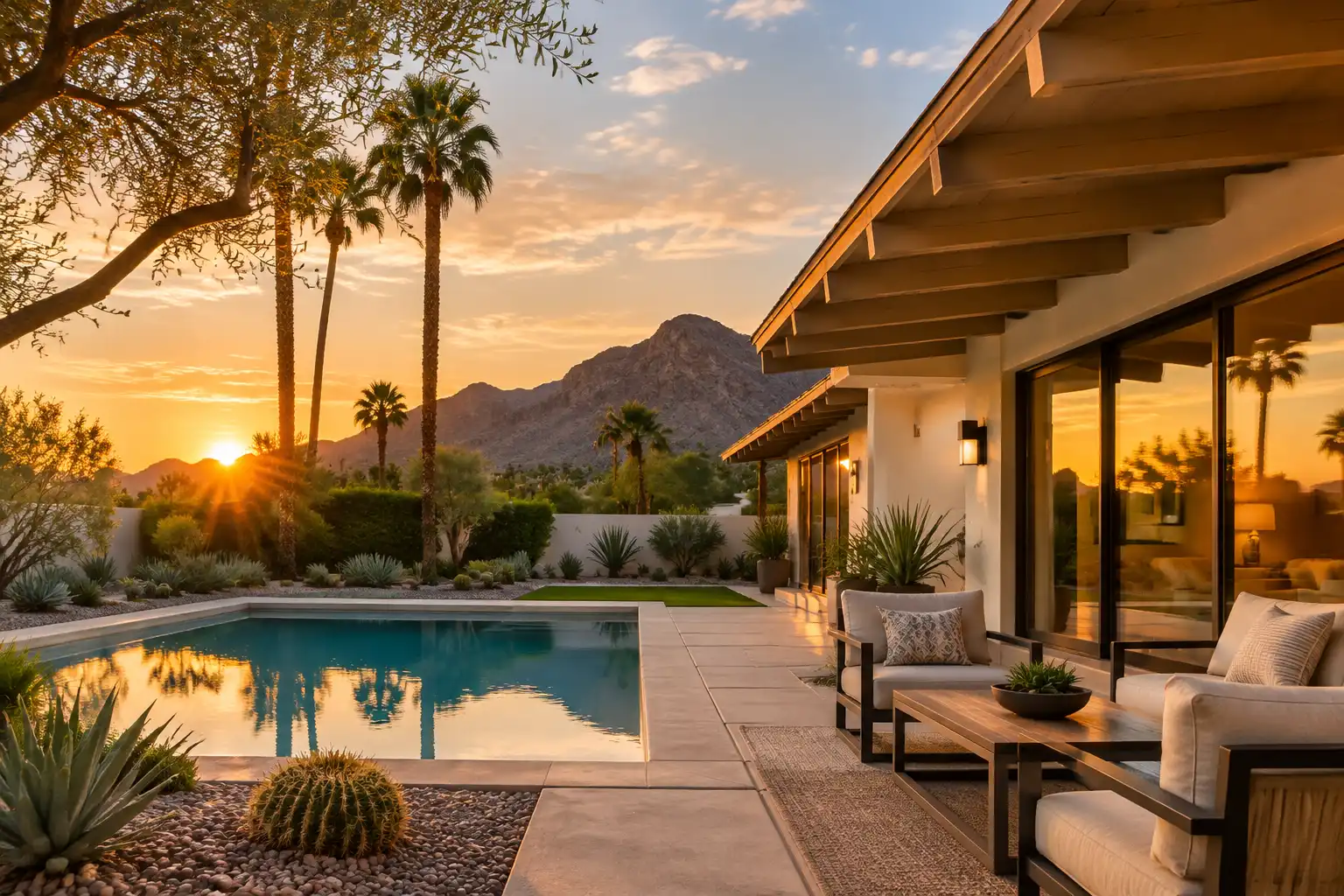
I pay attention to which way a home faces because the sun affects how its rooms and outdoor spaces feel. But I would never tell someone to pass on a home they love simply because it faces west. Our neighborhoods have homes running in different directions. You can’t eliminate half the possibilities with a compass.
The useful question is more specific: Where will you feel the afternoon sun, and what has been done to manage it?
I look at the windows in the rooms you’ll use most. Is the great room exposed late in the day? Does an overhang shade the glass? Are there established trees, exterior shades or a covered patio? If the yard gets strong western sun, is there room to add shade where you’ll actually want to sit?
A west-facing room can be wonderful. It may have the best view or beautiful light at the end of the day. I simply want buyers to understand that light in June as well as they understand it during a showing in January. Sometimes the answer is mature landscaping. Sometimes it’s window treatments, an awning or a different way of using the patio.
I appreciate the deep eaves on many original Arcadia ranch homes for this reason. They’re part of the home’s character, and they can make a practical difference in our climate. If a renovation removed them, I look for another way the house handles the sun. I ask the same question in a Biltmore condominium with a large wall of glass: what is the exposure, and what shades it?
Orientation is a detail to understand and plan around. It doesn’t decide whether a home is right for you.
What can ceiling heights tell you about an older home?
They often tell me how a home was remodeled—and where the work stopped.
Many original Arcadia ranch homes have modest ceiling heights. I’ve never thought that was automatically a drawback. A long room with a lower ceiling can feel beautifully proportioned, especially when it has good natural light and a strong connection to the yard.
When a remodel adds height, I look at how it fits with the rest of the house. Opening a ceiling into the roofline can make a room feel entirely new. But if you step from a dramatic great room into a hallway where the ceiling and drywall meet awkwardly, you can feel the difference between a thoughtful change and one made chiefly for the photograph.
I also ask what else was included in the renovation. If the living room was transformed but the bedrooms, bathrooms and windows were left alone, that isn’t necessarily a problem. It tells us to understand the scope of the work before assigning value to it.
How can you spot a home addition?
In an older home, I’m often looking for the point where the original house ends and an addition begins.
Sometimes it’s a change in floor level or ceiling height. Sometimes the flooring changes at an odd place, a hallway takes an unexpected turn, or a bedroom can only be reached through another room. Outside, I look for a shift in the roofline or a section of exterior finish that doesn’t quite match.
An enclosed Arizona room is a familiar example. A former patio can become a terrific family room if it was properly built and made comfortable for year-round use. It can also feel noticeably warmer than the rest of the house in August. That’s something I want to notice during the showing, then investigate with the appropriate records and professionals.
For an addition, I compare the living area represented in the listing with the Maricopa County Assessor’s record and look at permit history with the municipality that governs the property. Arcadia includes addresses in both Phoenix and Scottsdale; Paradise Valley maintains its own records. A difference between records is a reason to ask questions. By itself, it does not prove that work was unpermitted.
I’d rather help a buyer understand those questions early enough to make a considered decision. A licensed inspector and, when needed, a contractor or other specialist can evaluate the construction and condition.
Did the remodel respect the home’s architecture?
This is one of the things I care about most. A good renovation makes a house more enjoyable to live in while letting it remain itself.
I look at whether the new windows make sense with the original ones. Whether an addition belongs under the roofline. Whether the materials and proportions feel connected as you move from one room to the next. A home can have a modern kitchen and still feel true to its architecture.
The Biltmore offers a particular sense of place. The Arizona Biltmore opened in 1929 as part of a larger development that included land planned for residences. Its architecture is part of the area’s identity. That doesn’t mean every nearby home should look like the resort. It does mean I pay attention when a renovation understands the character of its setting—and when it seems to ignore the house it started with.
For buyers, this is partly about what you enjoy. It’s also about resale. The most successful renovations tend to make a home easier for someone else to understand and love when the time comes to sell.
What makes a home feel private in Paradise Valley or Arcadia?
A wall can give you privacy from the street. I also want to know what can be seen from next door.
I stand where you’ll actually spend time: at the pool, on the patio and in the primary bedroom. I look at neighboring homes, changes in elevation, second-story windows and any open lot nearby. If you’re buying a view, I want to understand what sits between you and it.
Paradise Valley has building height and open space rules that influence where a house can sit and how its mass relates to the property lines. Those rules are useful context, but they aren’t a promise that a particular yard or view will remain private. Hillside properties and individual parcels need a closer look.
In Arcadia, privacy varies considerably from street to street and lot to lot. Established trees can make an enormous difference. So can a neighboring second story—or the possibility of one in the future. I look at what creates the privacy you enjoy today, and whether that feature belongs to the property you’re buying.
Why does a home feel different in person than it looked online?
Listing photography presents a home at its best. I believe in doing that for my sellers. Good photographs help buyers see what makes a property special.
A showing answers the next set of questions. How does the house feel when you move through it? Where does the light fall at the hour you’ll be home? Does the layout suit the way you actually live?
I walk from the garage to the kitchen as though I’m carrying groceries. I look at the path from the pool back into the house. I consider where guests will sleep in relation to the rooms everyone uses late at night. I find the pool equipment, air conditioning units and trash cans, because you’ll live with those parts of the property too.
For a home you’re serious about, I like a second showing at a different time of day. A morning visit may tell you very little about how the patio or great room feels at five in the afternoon. Seeing both gives you a much better picture than trying to imagine it.
Do expensive finishes mean a home is well built?
Beautiful finishes tell you what you’re looking at. They don’t tell you everything that’s behind them.
I admire a gorgeous kitchen as much as anyone. Then I want to know about the roof, the age and capacity of the air conditioning, the windows, the pool equipment and the work completed during the remodel. In an older home, those details can have more bearing on comfort and future costs than the countertop everyone remembers.
With a spray foam roof, for example, I want to know when it was last inspected and recoated. The protective coating needs ongoing attention, and its useful life depends on the coating and conditions. An inspection or roof specialist can tell us much more about a particular roof than its appearance in listing photos.
The same applies to an addition served by an older air conditioning system or a beautifully remodeled home with original windows. None of these details automatically makes a house a bad buy. They help you understand what you’re buying, what may need attention, and what ownership could cost beyond the purchase price.
Some of the prettiest homes I’ve sold have also been among the best maintained. I just want the evidence for both.
Frequently asked questions about buying an older home in Phoenix
What should I notice at a showing besides the finishes?
Notice how you move through the home, where the sun reaches it, whether the rooms feel consistent, and what you can see from the yard. Look for changes in flooring, ceiling height or roofline that may indicate an addition. Then ask about the roof, windows and air conditioning. A showing helps you form questions; inspections and records help answer them.
Should I avoid a west-facing home in Arizona?
No. A west-facing home may be exactly the right home for you. Look at which rooms and outdoor areas receive afternoon sun and whether they have shade from overhangs, trees, covered patios or other features. If they don’t, consider whether you’d want to add it.
How do I check whether an addition was permitted?
Start with the Assessor’s property record and the listing, then check permit records with the correct city or town. If the records differ, ask the seller for documentation and investigate during your due diligence period. A square footage difference alone does not establish whether an addition was permitted.
Are high ceilings better?
Only if you like how they make the home feel. Modest ceilings can be part of what makes an original ranch so comfortable. I pay more attention to the proportions of each room and how the ceiling heights work together throughout the house.
Is a Paradise Valley home automatically more private than an Arcadia home?
No. Paradise Valley’s lot sizes and building rules can help create separation, but privacy depends on the specific property and its surroundings. In Arcadia, mature landscaping and the placement of neighboring homes may create wonderful privacy. Walk the yard and look beyond its walls in either neighborhood.
If you’re about to start looking
Most of this is pattern recognition. After years of walking homes in these neighborhoods, certain details catch my eye quickly. But every property deserves to be considered on its own merits. The point isn’t to find a reason to say no. It’s to understand what makes a home special, what you might change, and what deserves a closer look before you buy.
Send me a listing you’re considering. I’ll tell you what I notice, including the things that don’t appear in the photographs.
— Heather
This article shares my perspective as a local real estate advisor. For a specific property, verify square footage, permits, zoning and improvements with the appropriate records and professionals, and use qualified inspectors and specialists to evaluate condition.
Social Cookies
Social Cookies are used to enable you to share pages and content you find interesting throughout the website through third-party social networking or other websites (including, potentially for advertising purposes related to social networking).