
If I were buying in Arcadia today, I would spend a Saturday morning driving the neighborhood before I looked at a single listing.
I would start with Exeter and Lafayette, wind through Calle del Norte and the surrounding streets, and then head toward Arcadia Drive and the roads tucked against the base of Camelback Mountain.
Not because those are the only wonderful streets in Arcadia—they aren’t—but because driving them helps you understand just how much this neighborhood can change within a few blocks.
Lot sizes change. The tree canopy changes. Traffic patterns, irrigation, architecture and even the city in which a property is located can change without being obvious from the street. None of that is adequately conveyed through listing photographs.
Most buyers naturally begin their search by scrolling through homes online. In Arcadia, however, the neighborhood should come first. The house is only one part of the decision; the individual street and block can be just as important.
Why Arcadia Changes From Block to Block
Arcadia was never developed as one large, master-planned community. Long before it became one of the most desirable residential areas in Phoenix, it was home to citrus groves.
That history still influences the neighborhood today. The large lots, mature trees, irrigation and irregular street patterns were established for agricultural use. Homes were added later, creating a neighborhood without one governing HOA, one architectural style or one standard type of lot.
That is part of what makes Arcadia so special—but it is also why buyers need to understand exactly where they are buying.
I have had a unique opportunity to watch these streets evolve. I founded the Arcadia Camelback Home Tour approximately 26 years ago, and it has allowed me to walk through homes across Arcadia and the surrounding areas twice a month with other real estate professionals.
Over the years, I have seen original ranch homes, thoughtful renovations, beautiful new construction—and some rebuilds that did not respect the scale or character of their surroundings. I have also watched how different streets and pockets performed through changing real estate markets.
You begin to recognize patterns that cannot always be found in a comparable-sales report. In Arcadia, the block can matter every bit as much as the house—and you can learn a great deal about a block simply by driving it.
Exeter: The Street That Sets the Standard
I would begin with Exeter because it helps calibrate your eye for everything else in Arcadia.
The lots are generally substantial, with deep setbacks, impressive estates and mature landscaping. In some stretches, the tree canopy reaches across the street, creating the lush, established feeling that buyers often picture when they think of Arcadia.
Exeter also carries an important piece of Arizona’s architectural history. The David and Gladys Wright House, designed by Frank Lloyd Wright for his son and daughter-in-law, is located on Exeter. Although it is largely hidden from the street, its presence speaks to the architectural significance and history of this part of the neighborhood.
As you drive east, Exeter eventually crosses from Phoenix into Scottsdale. The scenery may feel continuous, but the jurisdiction, municipal services, property taxes and school assignments may not be.
Buyers can easily tour two homes on Exeter without realizing they are in two different cities. That is something you want to know before writing an offer—not after.
Lafayette: One Street, Many Different Experiences
If Exeter establishes one end of the spectrum, Lafayette demonstrates the range found within Arcadia.
Drive Lafayette from west to east and you will see attached residences, original ranch homes, extensively remodeled properties and large newer estates. The lots, architecture and overall feeling of the street can change considerably as you go.
When buyers tell me they want to live “on Lafayette,” my next question is always: Which part?
Lafayette is not one uniform experience, and neither is Arcadia. The right stretch depends on how you want to live. Do you prefer a more intimate residential setting? A larger estate lot? An original ranch home? New construction? Proximity to restaurants and daily conveniences?
This is also one of the places where buyers can clearly see the ongoing conversation between Arcadia’s original architecture and its newer homes. There are wonderful examples of both, but they offer very different lifestyles and carry different considerations for future value.
Calle del Norte and the Streets With a More Intimate Scale
Calle del Norte, Calle del Medio, Calle Redonda, Calle Ventura and the surrounding streets offer another side of Arcadia.
They generally feel quieter and more intimate than the larger through streets. You will still find original ranch homes with low rooflines and long horizontal profiles, as well as beautifully renovated properties and carefully considered new builds.
Some blocks have changed significantly, while others still retain much of their original scale and character.
This is an area I often show buyers who love Arcadia but worry that parts of it feel busier than they expected. The pace can change dramatically once you turn away from the better-traveled streets.
Again, buyers should never assume that every home sharing the same street name is located in the same city or offers the same setting. The individual block and parcel always need to be evaluated.
Arcadia Drive and the Streets Along Camelback Mountain
Arcadia Drive offers an entirely different experience from the irrigated flats below.
As you climb the south side of Camelback Mountain, the lots, landscaping and views begin to change. These streets offer elevation, dramatic Valley views and a sense of privacy that is difficult to duplicate elsewhere.
They also come with trade-offs.
The hillside is popular with walkers, especially during our beautiful-weather months. Yards are generally less expansive and usable than those on the flats, and the landscaping tends to be more desert-oriented because these properties are typically outside the traditional flood-irrigation network.
Hillside properties can also involve building restrictions and construction considerations that do not apply to homes on flatter parcels. If you are considering a major renovation, addition or rebuild, those questions should be explored with the appropriate city departments and experienced design professionals before you purchase.
Should You Buy on the Mountain or on the Flats?
For many buyers, this decision comes down to a yard versus a view.
If you picture children playing on grass, mature citrus trees, deep lots and flood irrigation, you will probably be happiest on the flats.
If you picture the Valley opening below you at sunset, city lights in the distance and the mountain rising behind you, the hillside may feel like home.
A small number of properties provide both a beautiful view and a generous, usable yard. Those homes are special, and they are generally priced accordingly.
Neither setting is inherently better. They simply offer different versions of the Arcadia lifestyle.
What I’m Watching From the Car
When I drive Arcadia with a buyer, I am not only looking at the houses. The house is often the part that can be changed.
I am looking at:
- Mature trees and the overall canopy
- Signs of flood irrigation
- Lot depth, frontage and setbacks
- The consistency of walls and landscaping
- New construction and active building sites
- How much through traffic the street receives
- Whether the street feeds into a major arterial or ends quietly
- The position of the house and how it receives the afternoon sun
I also recommend returning at different times.
A street at 10:00 on a Saturday morning can feel very different at school drop-off or at 5:00 on a weekday. One visit during the middle of the day does not tell you everything you need to know about living there.
The Arcadia Drive I Would Actually Suggest
Give yourself approximately 90 minutes and begin near 44th Street and Camelback Road.
Drive east so you can see the commercial heart of the neighborhood and how it gradually transitions into residential streets. Pick up Exeter and follow it east. Come back on Lafayette, paying attention to how the homes, lots and streetscape change along the way.
Then turn through Calle del Norte and some of the surrounding streets to experience their quieter scale. Finish by crossing north of Camelback and driving toward Arcadia Drive near sunset.
By the end of that drive, you will probably have opinions about particular streets and blocks. That is exactly what you want.
It is much more productive to begin a home search knowing how you want the neighborhood to feel than to rely entirely on a saved listing alert.
Frequently Asked Questions About Arcadia Streets
What is the most desirable street in Arcadia?
Exeter is often considered one of Arcadia’s premier streets because of its large lots, deep setbacks, mature landscaping and established estates.
However, “most desirable” and “best for your family” are not necessarily the same thing. I have worked with many buyers who preferred the intimacy of one of the Calle streets, the energy of Lafayette or the views found closer to Camelback Mountain.
The right street is the one that best supports the way you want to live.
What is the difference between Arcadia Proper and Arcadia Lite?
Neither term represents an official boundary, and different people define them differently.
Generally, Arcadia Proper refers to the more established portions of Arcadia known for larger lots, mature landscaping and irrigation. Arcadia Lite usually refers to areas farther west and south that tend to have smaller lots and a more accessible entry price.
The distinctions are useful conversationally, but buyers should evaluate each specific street and property rather than relying too heavily on either label.
Is Arcadia in Phoenix or Scottsdale?
Arcadia includes properties with both Phoenix and Scottsdale addresses. The transition is not always obvious when you are driving through the neighborhood, which is why the jurisdiction of an individual property should always be verified.
The city can affect taxes, services, permitting and school assignments.
Do all Arcadia homes have flood irrigation?
No. Flood irrigation is one of Arcadia’s best-known features, but it is not available to every property.
Availability can vary by street, block and individual parcel. If irrigation is important to you, confirm both availability and the property’s current rights and access before purchasing.
How do school assignments work in Arcadia?
School assignments are determined by the individual property address and should be verified directly with the applicable school district.
Never assume that two homes located near each other—or even on the same street—have the same assigned schools.
Before You Begin Your Search
Buying in Arcadia is not simply about choosing a house. It is about choosing a street, a block and a particular way of living.
Some buyers want an original ranch home beneath mature trees. Others want a newly built estate on a large lot. Some want children playing in an irrigated yard, while others want sunset views from the mountain.
My role is to help buyers understand those differences before they fall in love with a listing.
If you are planning an Arcadia drive, send me the addresses you have saved. I will tell you what I know about those particular blocks, what has recently sold nearby and what may be quietly coming to market.
After nearly 30 years of watching Arcadia grow and change, I would much rather help you understand the neighborhood from the passenger seat than have you discover something unexpected after closing.
— Heather
This article is provided for general information and reflects conditions as of September 2026. Jurisdiction, irrigation, zoning, taxes and school assignments should be independently verified for any property under consideration.
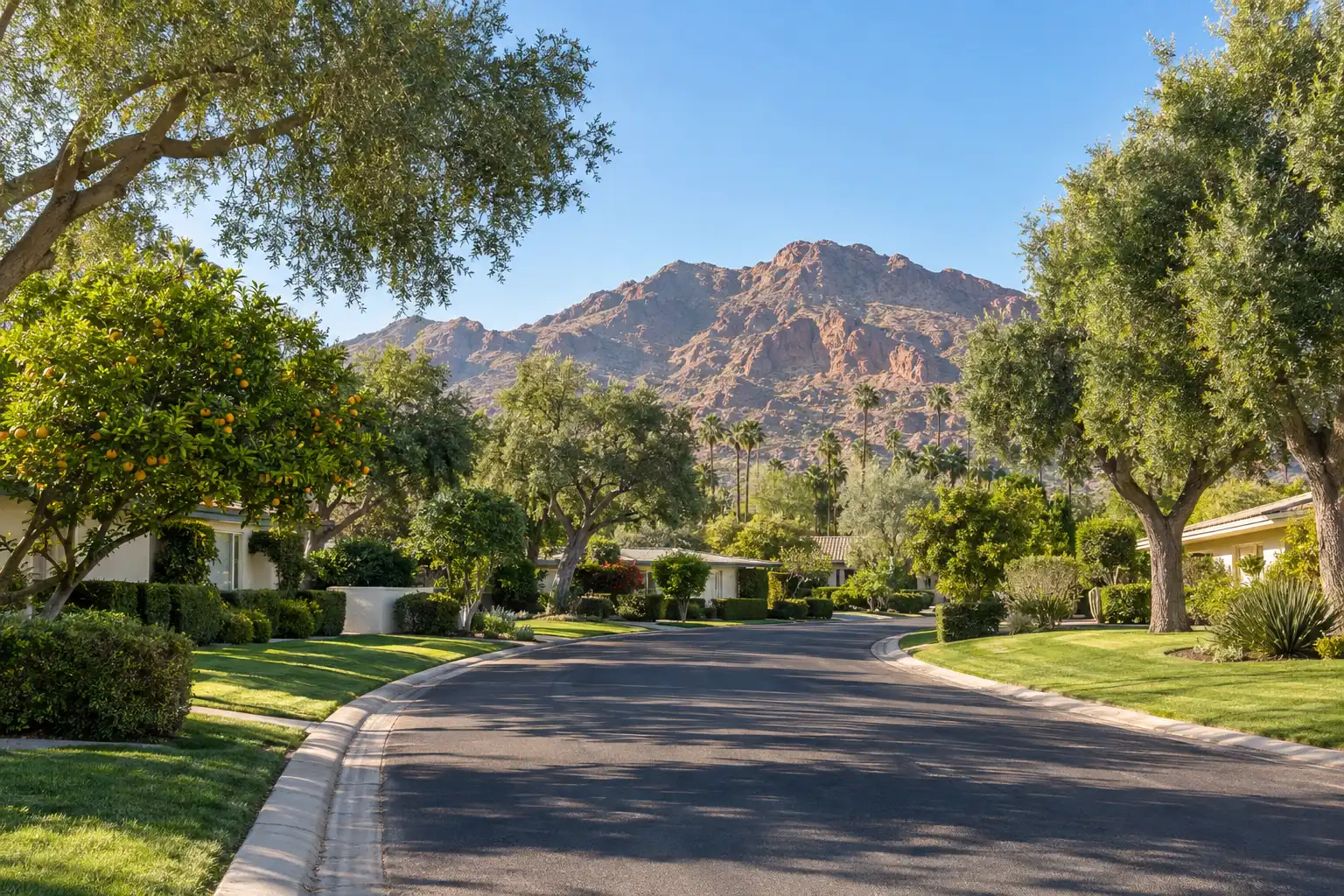
Photo Credit: AI-generated illustration inspired by Arcadia
Social Cookies
Social Cookies are used to enable you to share pages and content you find interesting throughout the website through third-party social networking or other websites (including, potentially for advertising purposes related to social networking).